Tuesday, February 20, 2018

Jewish Messiah: A Historical and Mystical Perspective


Today we will be discussing the concept of Messiah or Meshiach as it developed in Jewish thought. There are some academics that describe this concept as coming from Zoroastrian or Babylonian influence (other near eastern religions), although this is possible I can show how historically this is an Israelite concept. One theory is that when the Jews were in exile in Babylon they developed the idea of the messiah as part of remembrance and romanticism of time of David and Solomon. Others say that the influence of the book of Daniel and the Maccabean Revolt brought Messianic expectations to the forefront. However, there are different ideas of the Messiah within various communities such as the Essenes who wrote the Dead Sea Scrolls, the writers of New Testament, and both the rabbis who compiled the Mishna, and the ones who developed the different versions of the Talmud, there are also Midrashic texts which interpret the Bible and the many Medieval treatises.

There are different figures who have claimed the title of Messiah throughout history, these figures arouse usually during time of Jewish persecution such as Bar Kochba (which Rabbi Akiba supported in 130s A.D. and Jesus who some people believe wanted overthrow the Romans either physically or spiritually. 

Some scholars would connect messianism to the many Jewish charismatic movements seeking the End of an Age or the redemption of humanity. One of my favorite scholar Geza Vermes sees Jesus as a leader of a charismatic group and there are other examples of leaders in Jewish history whose aspirations were to lead the world in a messianic kingdom such as Sebbatai Sevi and Jacob Frank. Some people would compare some groups with modern fundamentalists in the Middle East. Although I don’t see this as a fair comparison there are some similarities. One of the many issues regarding the Messiah are differences interpretations of the Bible between these various groups.

One important aspect of the biblical narrative is the “Day of the Lord" which conveys a difficult passage of time in the history of Israel followed by the ingathering of the scattered people and a recovery of independence in their land. Jews have tried to reconcile the lack of fulfillment of this prophetic idea throughout the centuries looking for different kingdoms to bring about this. 

Rabbi Yehuda HaNassi, the compiler of the Mishnah in around 200 CE, was reluctant to encourage any mention of the Messiah, after the failure of the Bar Kochba revolt in 132-135 CE. A passage from Eicha Rabbah 1:51; Yer.Brachot 2:4 which says the following: "On the day that Jerusalem was destroyed the Redeemer was born." Many sources discuss how King Hezekiah was the messiah. The following passage is Talmud “Prepare a throne for King Hezekiah, who is coming" (Ber. 28b ARN 25:40). It is interesting to note that the idea of 2 Messiah's in Judaism come from the midrash called “revelations of Simon Ben Yohai”

The Mishna, the foundational source of the Talmud, only it speaks of a messianic age, in M. Sota 9:15 it says: With the footprints of the Messiah arrogance shall increase and dearth reach its height; the vine will yield its fruit but will be expensive: and the empire shall fall into heresy and there be none to utter rebuke. The council chamber shall be given to immoral practices.... children shall shame their elders, the son will dishonor the father, the daughter, the mother. The face of the generation is as the face of the dog... (M. Sota 9:15). There is another passage in Mishna Brachot 1:5 which is connected with the Exodus, in Deut. 16:3 says the following: An answer was that if Scripture had simply stated "the days of your life" this would mean only during the days, but since it stated "all the days of your life," this is taken to mean also during the nights one must remember the Exodus from Egypt. The sages further expanded on that first interpretation. Thus, "days of your life" would refer to this world only, but "all the days of your life" would also include the Days of the Messiah.


In his book “Messianic Speculations in Israel” Abba Hillel Silver quotes Moses Albeda who believes that the Messiah is tied to G-d’s mercy, that he should vindicate the Name of G-d, and that he is part of the promises G-d made to the Jewish people.

Wednesday, January 25, 2017

Teaching a Four Year Old Jewish Theological Concepts


Since my two daughters were born I have been trying to figure out how to teach the Bible (Tanak) to them. Not only do I have to teach them age appropriate information but it has to be from Jewish perspective since there are many biblical children books but very few are Jewish. One visual aid is the amazing film called " The Prince of Egypt."

Some humanist would say that everything in the Bible is violent and it teaches children retribution through physical conflict. This became apparent when my daughter started cheering for G-d to destroy the Egyptians with the waters of the Sea of Reeds. I saw that as an opportunity to teacher about the Midrash which teaches that we should not to rejoice on the death of our enemies since G-d told the angels they should not sing at sight of the death of the Egyptian soldiers since even evil people are G-d's children in Jewish thought (Talmud, Megillah 10b and Sanhedrin 39b).

I spoke to her about justice since the bad guys died because of their sins and the good people survived so they can enjoy freedom from slavery and abuse.

When the first born was killed by the angel of death I told her how there are different types of angels ones who bring you to life and ones that take you to heaven. Not sure if this is discussed in Jewish literature but it sounds like an appropriate thing to say to a child. 

The blood of the lamb on the lintel of the door was a little harder to explain, but it pointed to the concept of G-d’s protection.  What was very difficult to discuss with a child was the corporate punishment for the sins of a leader of a nation. 

The movie humanizes Moses and shows him grieving for the impact of the last plague. This is important to consider since God suffers too when human beings suffer in Jewish thought.

The burning bush is a strange symbol or theophany since G-d is non- corporeal. To me the bush represents G-d being among his people versus Egyptian hierarchical system and the majesty of their temples. I taught my daughter about how the miracle of the staff turning into a serpent is a symbol of power.  Just like the head decoration on Pharoh's crown is a cobra, the staff turns into a serpent as a challenge to Egyptian symbols of power. Moses speaks the language of the Egyptians through the miracle showing greater power from G-d over creation as compared to the Magicians, Jannes and Jambres, and their tricks.

One can tell that Jews wrote the movie when you see Pharaoh not dying at the end of the film. According to the Pirkei d’Rabbi Eliezer ( Exodus 14:28) he survives and eventually became the king of Nineveh repenting at a later time.

The DreamWorks film, which came out in 1998, had a great impact on me. I hope it is as significant to my children’s religious education.

Friday, April 15, 2016

Modern Interpretations of The Bible II


During my last post I discussed mysticism in the current incarnations of the Jewish Bible in film. We will now discuss this phenomenon in television. 
In the past few years American artists have created many thoughtful and not-so thoughtful versions of the biblical text. The reason I call them artists and not scriptwriters or producers is because I know how difficult it is to portray ancient truths to modern audiences. This challenge takes a great amount of creativity and technical ability. We will focus on the most recent incarnation of the biblical narrative.

"Of Kings and Prophets" blew me away when I watch its pilot, but confused its purpose during the second episode. What is striking it is how the raw nature of the Bible is finally depicted in a show. As a fan of the first season of Spartacus, I can see how the ancient times without modern day morality would be difficult to religious people to watch. But the way that modern audiences can handle roman savagery, they should be able to swallow a show that is faithful to the intrigue and tribal conflict depicted in the Tanak. Most audiences thought the show was too violent and too sexual, proving they have not read the book of Samuel. How can Jewish mysticism helps us through this conflict of morality versus accuracy in relation to the Biblical text? Are we allowed any artistic license when communicating our religious tradition as we try to connect with people's hearts other then their minds?


Traditional Judaism would consider this show exploitative while more modern Jewish groups would consider it thought provoking. I consider it a challenge to my mystical understanding of the sacred text. I can look up the traditional view of Saul and David. And share it with my readers, what I really want to do is consider how it affects me spiritually to see my religious heroes as flawed men. They not only treat each other with love and hatred but show a contrast between western ideas of father and sons rivalry. No Oedipus conflict but compassion and love from David to Saul the man who was hunting him down. I find this very mystical and powerful something only a TV show can remind me of.

Modern Interpretations of The Bible I


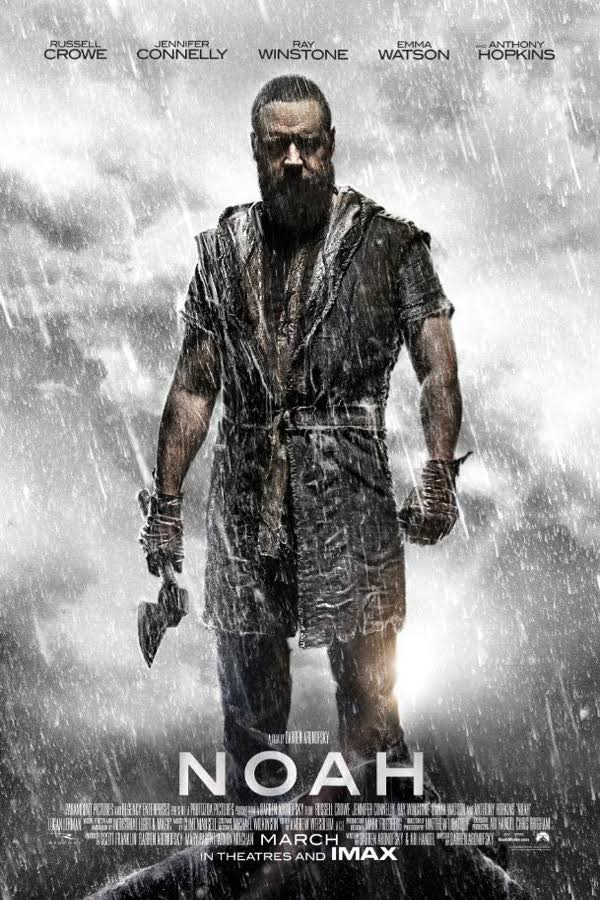
Some might say that I am no longer talking about mysticism, but am now discussing popular culture. What is there more mystical than the Bible? and how can we draw spiritual insight from it in our modern world? The answer is looking at the greatest film directors of our time and their attempts at tacking the Jewish scriptures. The first film was loved by many no matter how many liberties it took since it was faithful to the themes of the biblical text. The next film was criticized more for its inaccuracies and felt to many as it betrayed the biblical story. 

I disagree with the overall popular perspectives, since they are not concerned about the same things that I am. I worry about the following issues: how can we make the Bible become alive? and can we  communicate its lessons to a new generation? The two so-called atheists directors chose to tackle two powerful ancient stories, something religious believers don't have the courage to do. When was the last time we have seen a religious film tackling secular myths with this passion and desire to make sense of these stories? Noah's midrashic style made it powerful, while the story of Moses is dealt with with an often forgotten rational approach which would please the likes of Moses Maimonides. The explanations behind the plagues should not seen as modern dismissal of miracles but as a creative way to solve the puzzle of God's ongoing involvement in human affairs.  I believe that before we dismiss a work of art we most consider their desire to be relevant and infuse new energy to our well known biblical heritage while addressing modern concerns as well.


Thursday, February 25, 2016

Heavenly Jerusalem


At that time they shall call Jerusalem the throne of the LORD; and all the nations shall be gathered unto it, to the name of the LORD, to Jerusalem; neither shall they walk any more after the stubbornness of their evil heart. Jeremiah 3:17


In his book Israel An Echo of Eternity Abraham Joshua Heschel speaks about how “the holiness of the land of Israel is derived from the holiness of the people of Israel" (Heschel, pg. 11). At a time that Jerusalem is at the center of much turmoil in the Holy Land, we must turn to mysticism to give us some perspective.  The future hope for Israel and its capital Jerusalem can only come when we turn to the Jewish understanding of the heavenly Jerusalem.

The Dead Sea Scrolls speak of a New Jerusalem in connection with the Biblical book of Ezekiel, just like the sectarian apocalypse of the Notzrim. When comparing the fragments found at Qumran to that of Ezekiel, one may find several parallels. Description of the New Jerusalem is found in fragments in caves 1, 2, 4, 5, and 11.

Influenced by I Enoch 90:28–29 and IV Ezra ‪7:26, ‪10:54, these texts provided further inspiration to the Rabbis. One midrash, imagines the earthly and the heavenly Jerusalem uniting as one at the end of time. Their union comes from an interpretation of Tehilim 122:3 which discusses that, “Jerusalem built up, (and become) a city knit together.”

Rabbinic writers described the earthly Jerusalem as reaching the throne of Divine Majesty (PdRK 143b; and see Tanh., Ẓav, 12; PR 41: 173a) and in later apocalyptic literature the heavenly Jerusalem is seen as coming down to earth in entirety (Nistarot de-Rabbi Shimon bar Yohai in Beit ha-Midrash, 3 (1938), 74f., 80; Sefer Eliyahu, ibid., 67).

Another midrash portrays the heavenly Jerusalem as a template of the earthly Jerusalem, Rabbi Yochanan believed that only when the earthly Jerusalem is restored fully that the heavenly Jerusalem will be inhabited by God. Talmud Bavli, Taanith 5a states: “The Holy One (said, I will not enter) heavenly Jerusalem until I can enter the earthly Jerusalem.” 

Jerusalem is also believed to be the focus of Isaiah 60:1-3, which says the following:  Arise, shine, for thy light is come, and the glory of the LORD is risen upon thee.  For, behold, darkness shall cover the earth, and gross darkness the peoples; but upon thee the LORD will arise, and His glory shall be seen upon thee. And nations shall walk at thy light, and kings at the brightness of thy rising. 
Let this passage of the Tanak be our prayer for Yerushalayim!